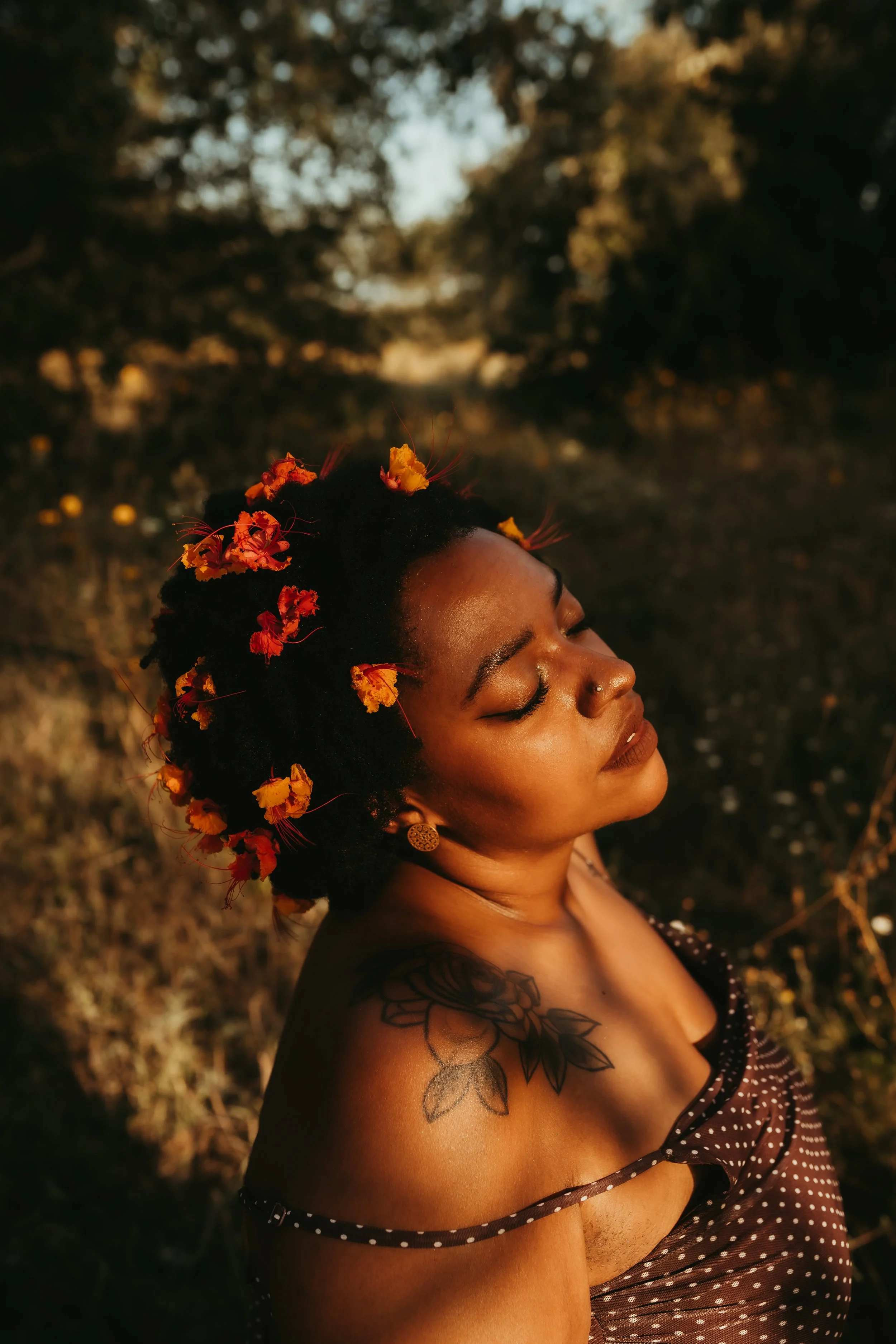
model: jerrica / instagram: jerricafromamerica
Most people believe that a photographer’s greatest asset is to see their clients, but I believe that hearing your clients is the only true way to tell their story.
It’s no secret that black women’s hair has a long history of being scrutinized, appropriated, and policed. I knew I wanted to create a shoot that not only celebrated afro-textured hair, but also amplified and centered the voices of the women wearing it. Growing it. Living it.
I had the absolute honor of photographing Jerrica, a long time client of mine. I put flowers in her hair, listened to her experience, and put together this interview.


Fawn: What messages did you receive growing up about what “good hair” was supposed to look like?
Jerrica: “Good hair” was not soft to the touch, but smooth, manageable. My mom had stick straight long hair most of her life. My dad had issues with me ever wanting to cut my hair, but allowed me to once I turned 18. “Good hair” was the silk pressed, chemically relaxed hair that felt silky and smooth. So imagine having to fight my natural texture DAILY to achieve that.
Fawn: How important was it for you to see other black women embracing their natural hair when you were growing up?
Jerrica: I didn’t have black women with natural hair until the natural hair trend about 10 years ago or so. It’s all VERY new and positively viewed. My gorgeous bestie twin of an Aunt was my inspiration! I’ve always been her little mini, but she was the first person that I could see take the leap and radically change and free herself from the relaxed hair.
Fawn: What do you hope young black girls learn about their hair that you may not have learned growing up?
Jerrica: You are the only person that should be deciding how the hair that grows from your own head should look. What you see in the mirror matters and shapes how you interact in the world. If it’s taking everything inside you daily to achieve a look that won’t last through the day, stop fighting nature and spend that time learning ways to protect your hair and build a style that’s your own.
Fawn: How has your relationship with your hair changed as you’ve gotten older?
Jerrica: I strictly put chemical relaxers in my hair from early elementary through my junior year of college. YIKES, the maintenance on that was criminal. Over time as I felt more comfortable in my blackness my hair appreciation came along with it.
Fawn: Have you ever felt like you had to make your hair less “black” in order to fit into a certain environment?
Jerrica: Coming from a predominantly white suburban area and coupled with a religious family that was all about appearances/ impressions, I had to grow into understanding and loving my hair. Some styles that black women/ girls had that were trendy were ones only achieved through chemicals or wigs/ installs. My parents didn’t allow me to get most protective styles (braids and things with extensions) so I could only get chemically relaxed options. The most affirmed in my blackness I have ever been came as a 30 year old through my natural hair stylist! The FIRST person to affirm my hair and opt to feature me on her social media/ business. She educated me on my own hair, told me the ingredients my texture would need to maintain a healthy balance, and used options for correct applications of heat and how to detox and protect.
Fawn: What do you wish people who don’t have Afro-textured hair understood about your experience and journey with your hair?
Jerrica: The weight of the mental load that we have to endure and the PRIVILEGE it is to have a texture that is the assumed majority, norm, and minimum standard. This isn’t a matter of “This stylist is the only one I trust to get my blonde perfect” or “she knows exactly what I want every time”. It’s a matter of “what stylist has documented experience, flexibility, and knowledge of how to protect and enhance my hair & not create new trauma surrounding my identity.” I don’t want to sit down and be seen as an exotic science experiment for someone’s portfolio or to be hidden as a less than desirable representation of their own efforts.
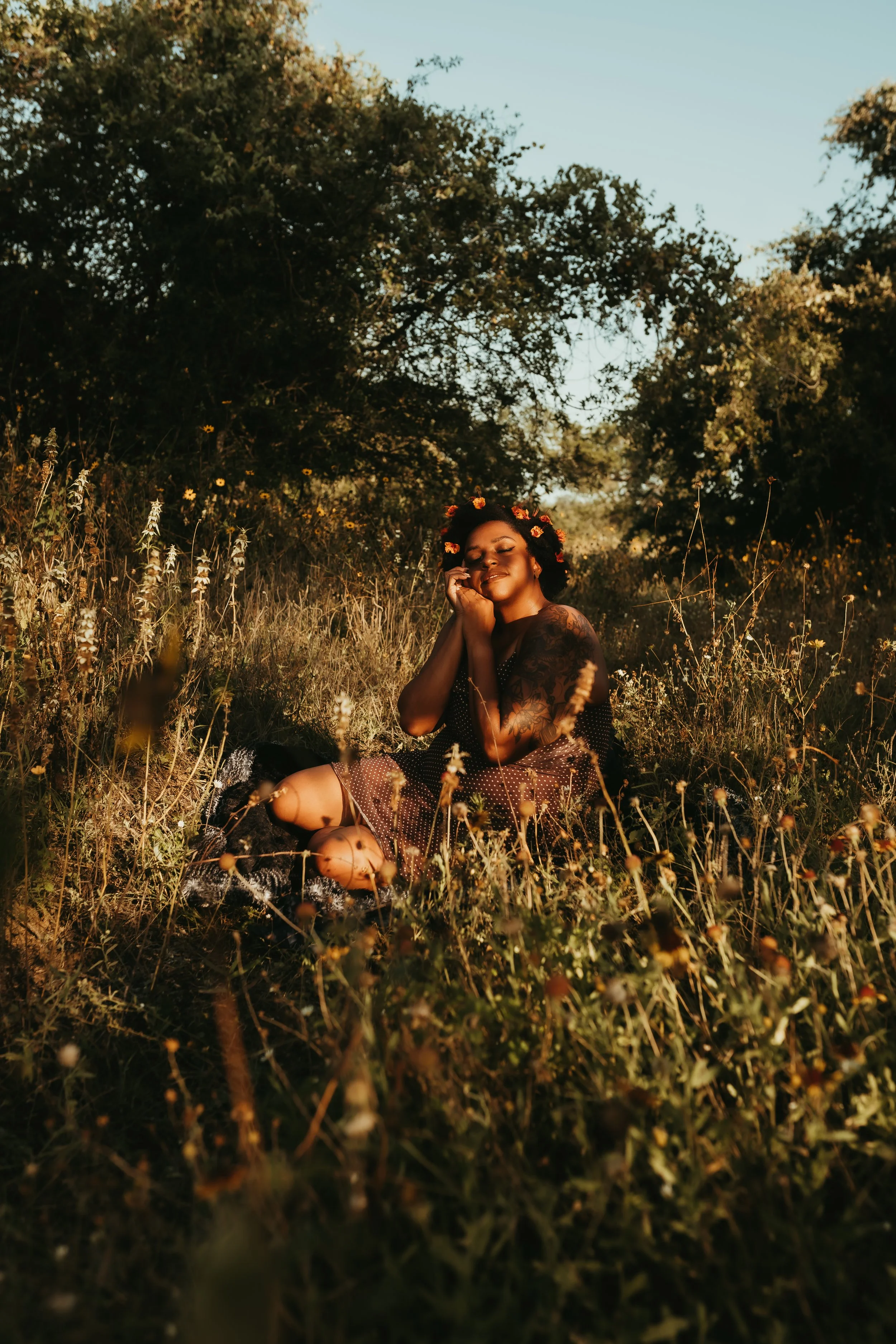
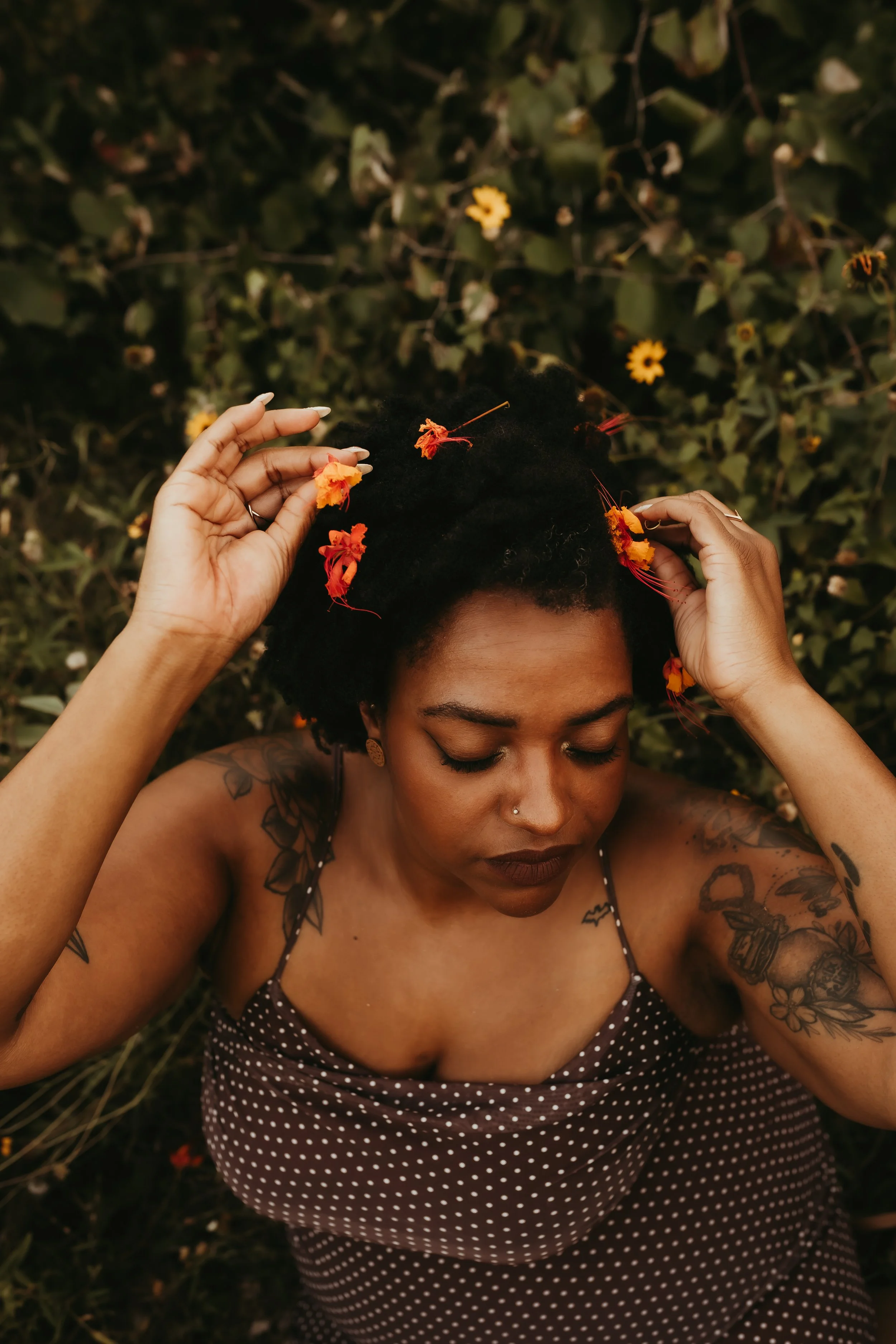
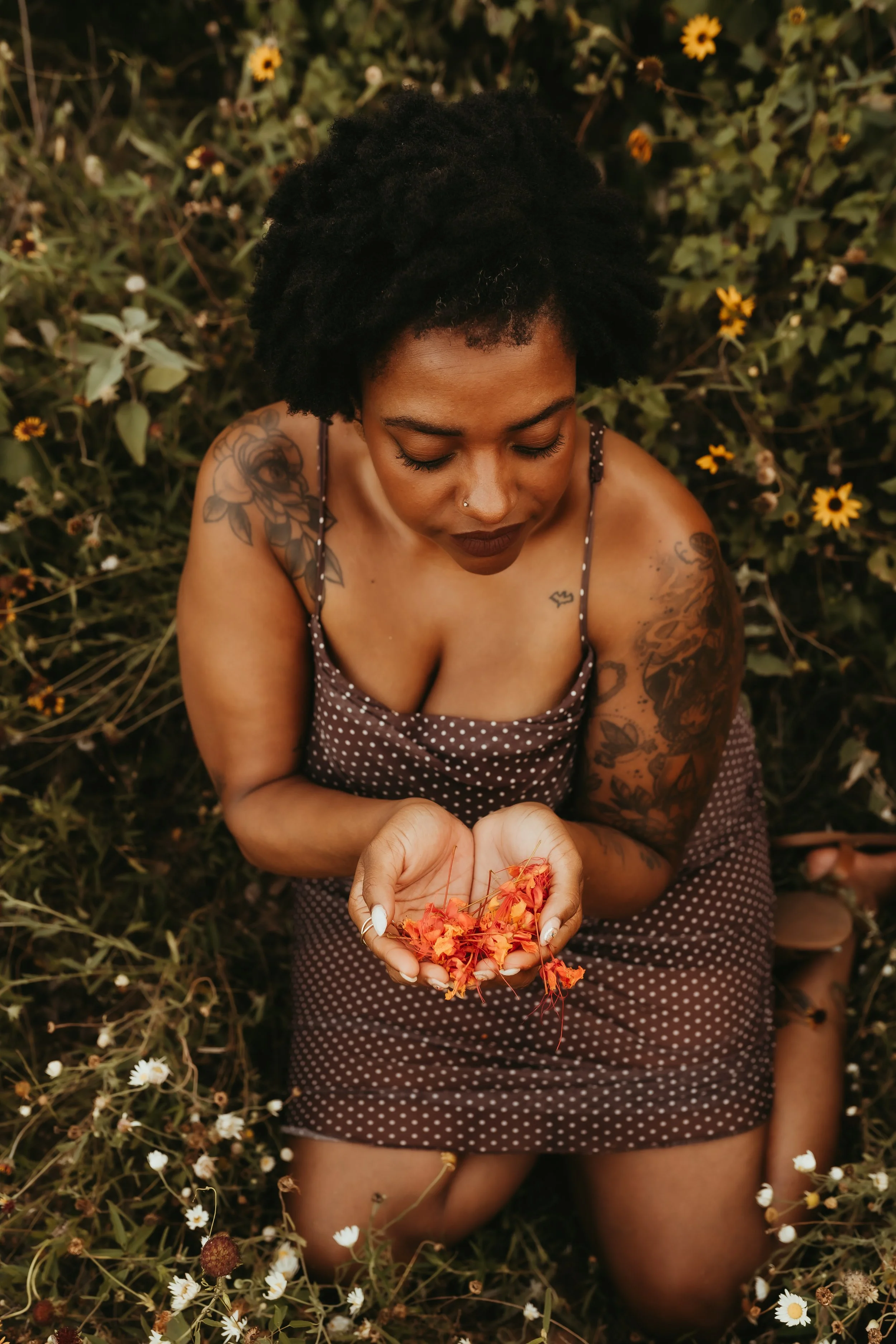
Fawn: When you see these images with flowers woven through your hair, what do you see?
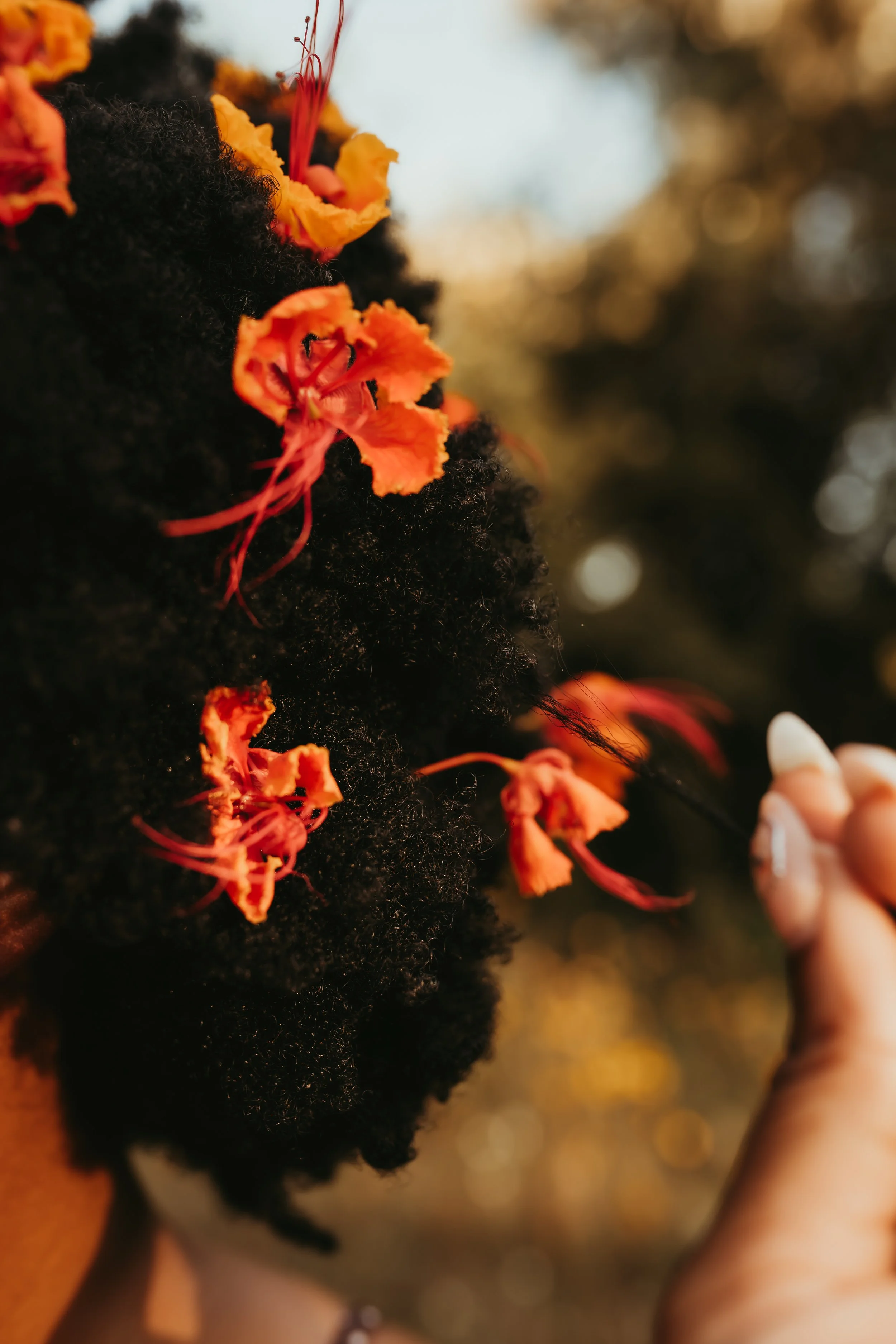
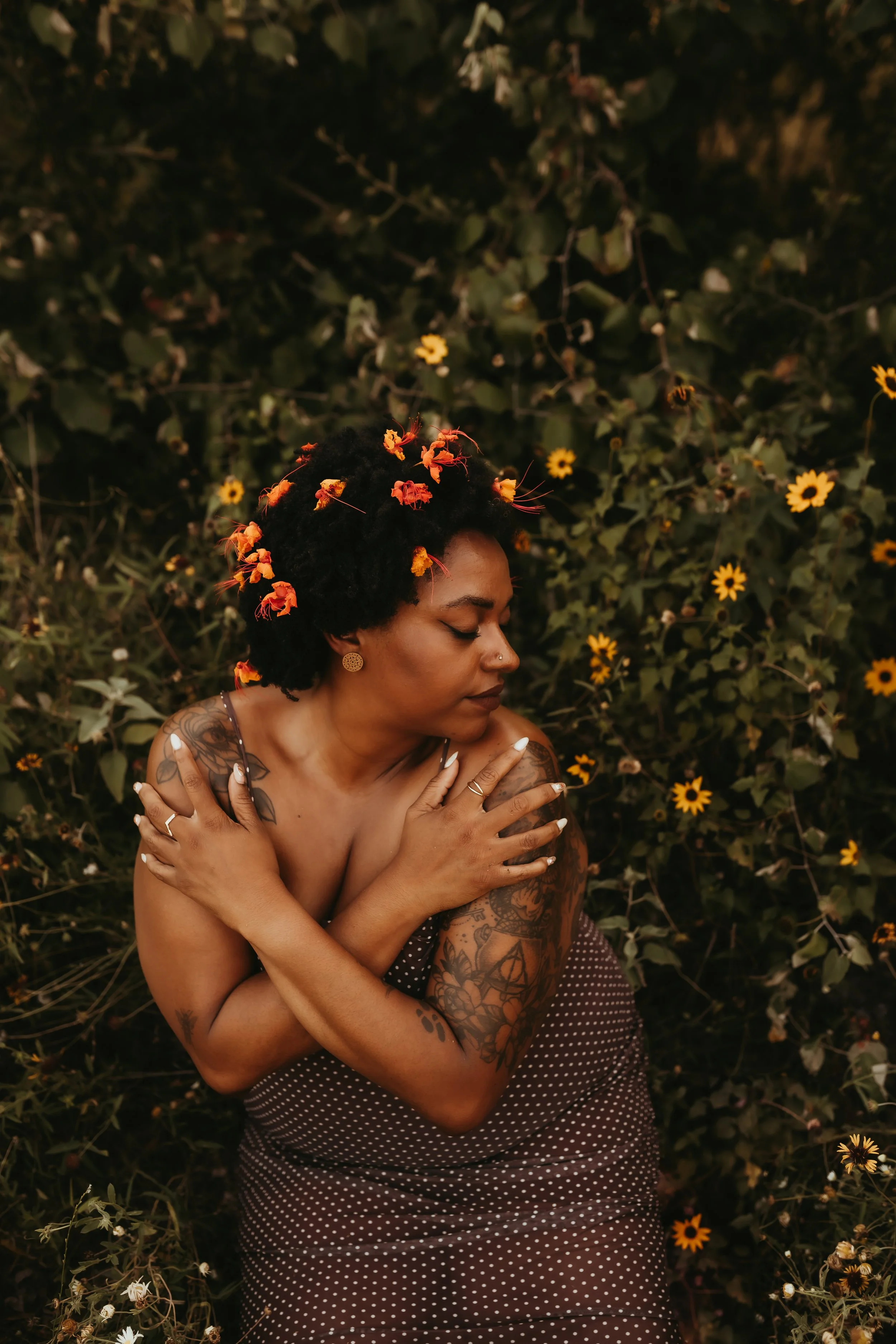
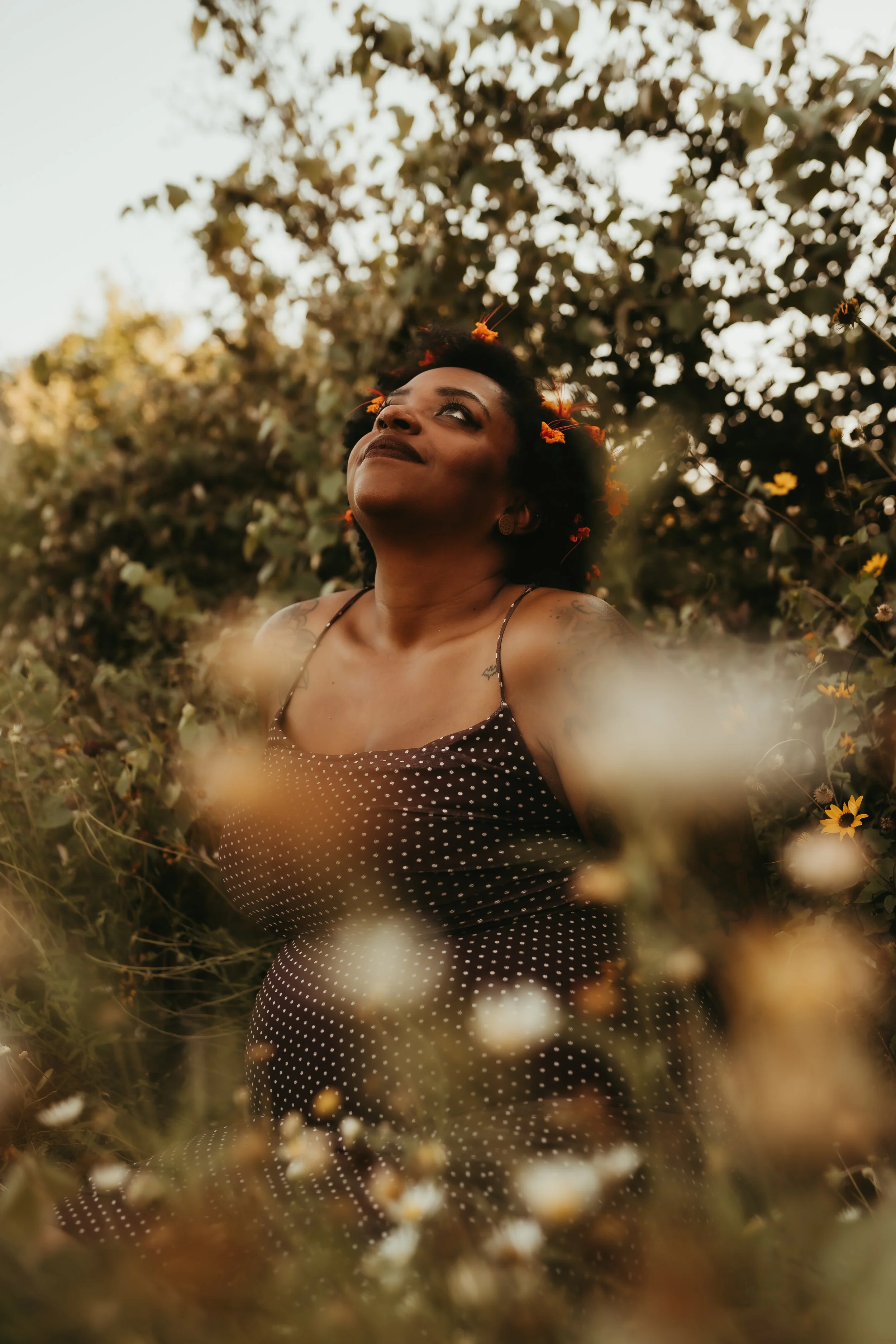
Jerrica: Confidence, resilience, and beauty. I love that the versatility even shines through in these few photos.
Fawn: The flowers aren’t there to make your hair beautiful because your hair was already beautiful before we added a single petal. What does it feel like to see it celebrated in this way?
Jerrica: The range in these photos shows how different every detail in nature, humans, etc. truly are. Some more tighter curls holding the flowers, others with curls stretched and standing tall. I don’t always love how my hair looks with the curls shrunken down, but I LOVE that I can’t even say that because the beauty of the flowers and how beautiful I feel as is!
Fawn: What does beauty mean to you now?
Jerrica: Fully present as I am and everything that’s carried me to where I am. It’s a complete freeing of judgements that don’t pay my bills or inspire me to do better/ more. I learned that criticism doesn’t stop, it only changes, whether direct or indirect. I can only control how that criticism affects me and I’ve done the work to hear it and can immediately release myself If I choose.
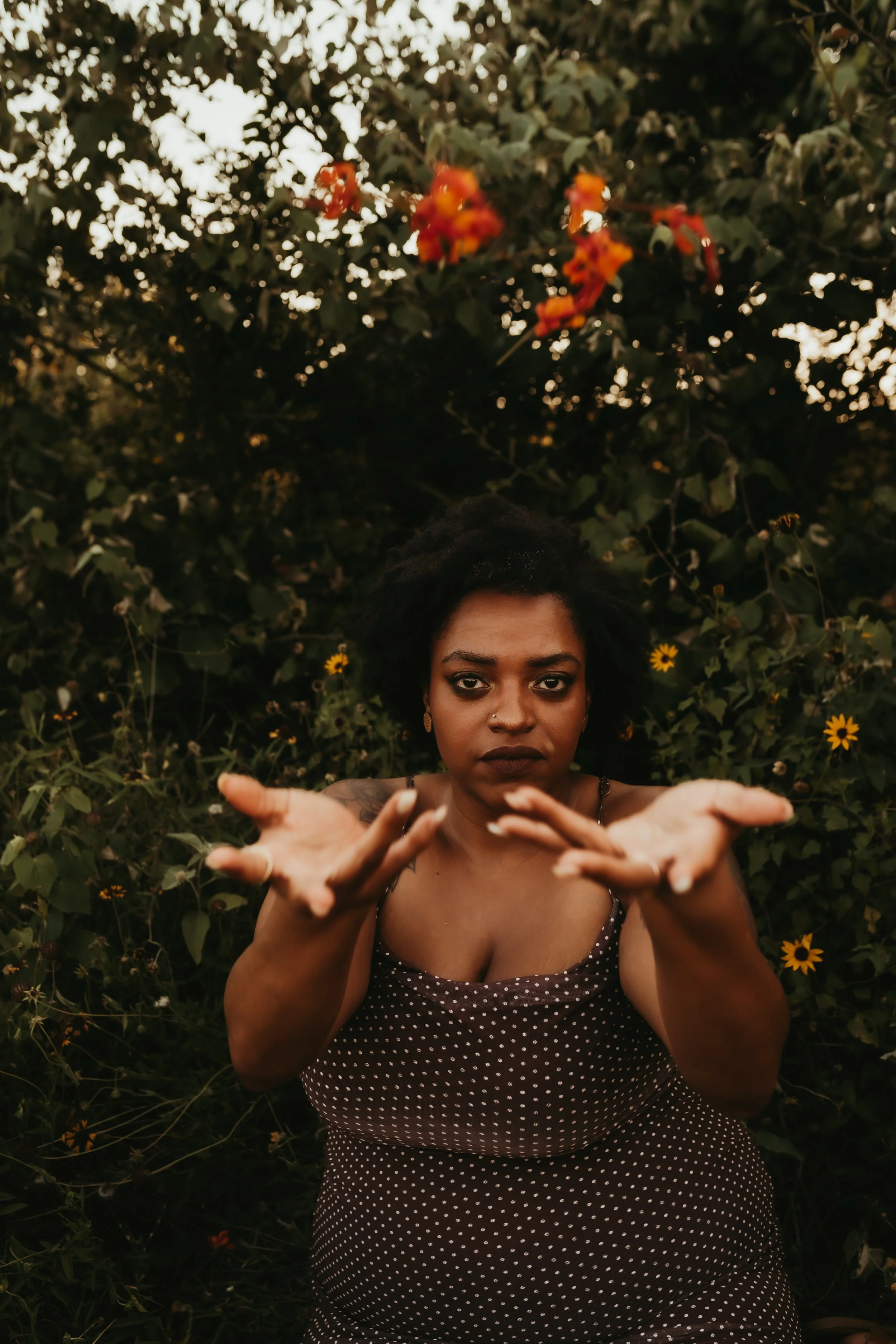
Readers, thank you so much for taking the time to read my very first blog post, and thank you to Jerrica for being such a beautiful and vulnerable soul. My goal is to always center and amplify the voices behind the stories I tell in my images and I am honored every single day to wake up and get to do so!
let’s tell your story
My name is Fawn, and I turn your story into beautiful, emotive, and powerful visuals that are unique to you! If you’d like to create with me, you can inquire with me here: [inquire here]
Want a photographer that centers, listens, AND sees you? Good, you deserve that.